
Library
Construction Materials and Risks to Nature
06 October 2026
Construction Materials and Risks to Nature


Nature is under pressure. Seven out of nine planetary boundaries have been crossed. Both globally and in the Netherlands, most attention goes to limiting climate change. At the same time, halting biodiversity loss and restoring nature requires at least as much attention.
In the Netherlands, a growing number of construction companies work on nature-inclusive construction. This is a positive development, as it means we take nature at the construction site into account. At the same time, we must also take nature into account in the supply chains of our raw materials.
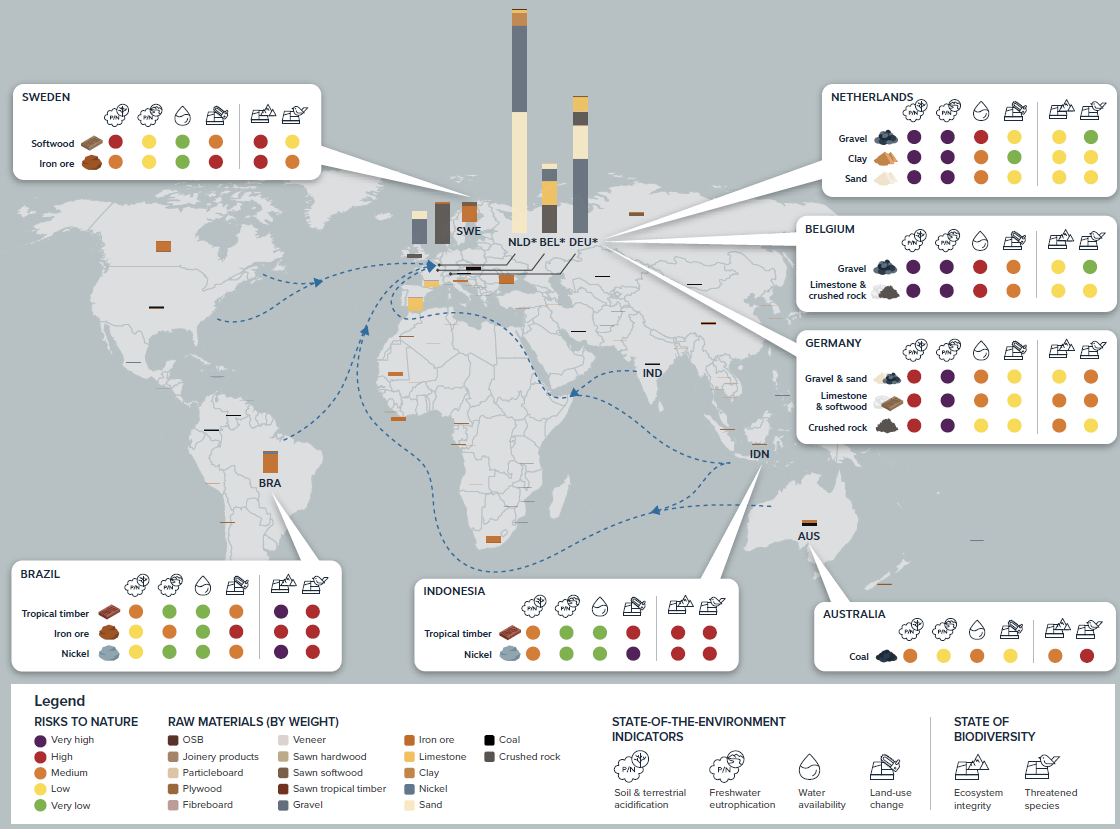
This exploratory study identifies the nature-related risks associated with the extraction of raw materials for the Dutch construction sector. The analysis covers concrete, steel, asphalt and timber. For this analysis, we applied the Science Based Targets for Nature (SBTN) methodology.
Construction requires raw materials. Extracting these raw materials introduces risks to nature, for example through water use in water-scarce areas, nitrogen emissions in areas with high nitrogen concentrations, or a strong presence of threatened species.
The main nature-related risks per material:
The environmental impact and nature-related risks of abiotic materials (concrete, steel, asphalt) differ from those of biotic materials (timber). The environmental impact of abiotic materials is generally higher than the impact of bio-based materials. Whereas abiotic raw materials cause environmental impact through energy-intensive production processes, biotic raw materials require land surface to grow.An important consideration is that producing construction materials often causes a greater environmental impact than extracting raw materials. Fossil fuels – both extraction and combustion – are the major cause of this. This results not only in carbon emissions, but often also in biochemical pollution that harms nature.
We need to broaden our focus from nature-inclusive construction to nature-inclusive supply chains. This requires a combination of three pathways: